Hi! I’m M. Jack Ferdinand,
and I’m a full-stack creative.
I specialize in crafting authentic and stylized
podcast, documentary & personal brand content.
With over 12 years of experience in media and a background in the film industry, I am uniquely equipped to handle every facet of content production: from concept, to delivery, to distribution.
I have worked in various studios and agencies in Dubai as a videographer, photographer, and creative director.
Now, I run my own solo boutique podcast & personal brand content production and management business.
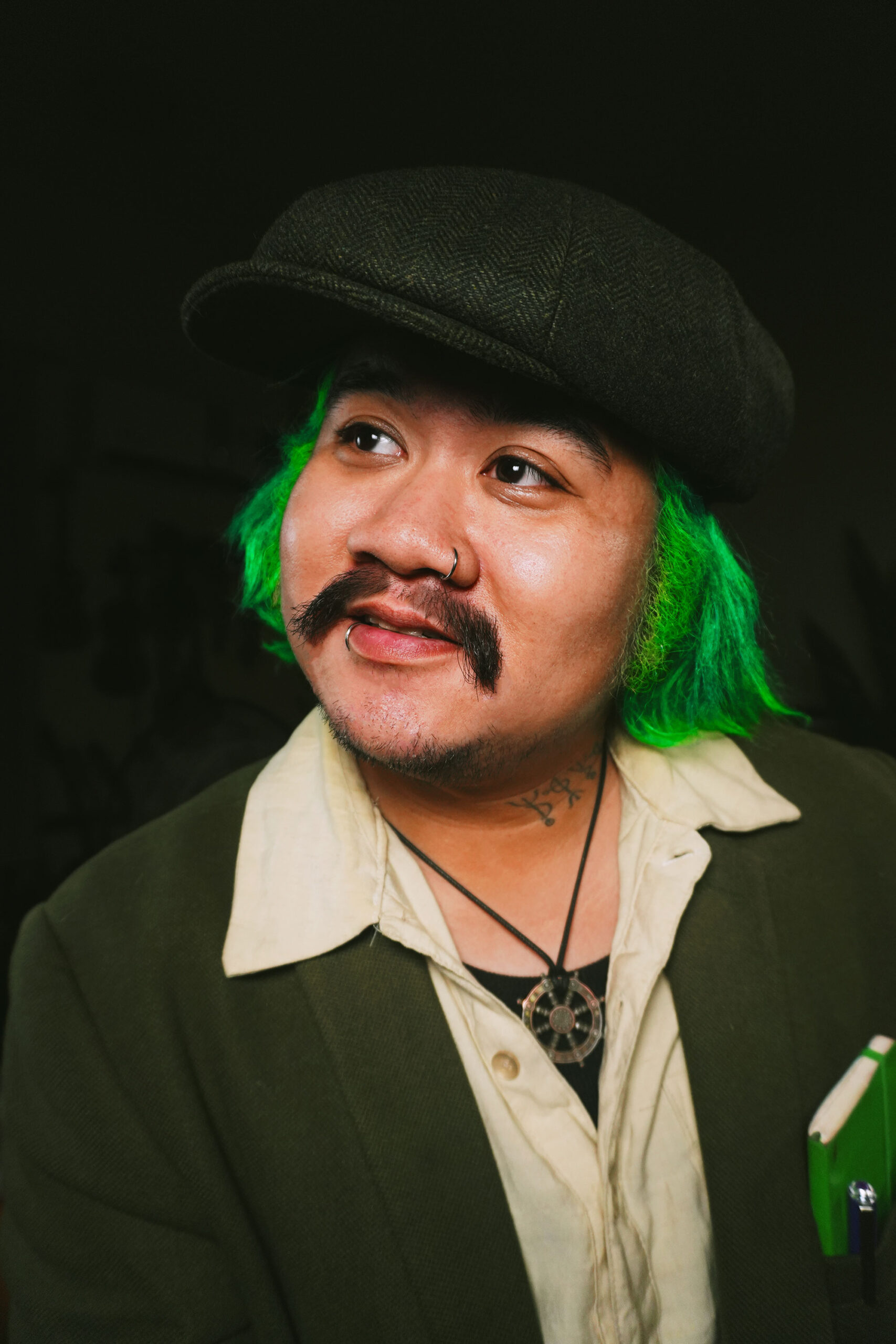
I am an advocate of human storytelling, and I see the podcast as the new folk medium. I am not simply a creative, nor a producer; I am a shepherd of stories and I use my style, taste, and experience to help immortalize beautiful ideas and inspiring people.
Long Form Video
My approach to long form video editing is deeply rooted upon cinéma vérité (or “truth cinema”). I prioritize the preservation of natural and conversational dialogue, and both the intimacy and immediacy of it.
I use simulated camera movements to supplement emotion and enhance viewer experience in a way that makes them feel like they’re part of the conversation—like a “fly on the wall.”
But these days, in order to grab attention, you need flash…
A Rheto-Editorial Approach
Though, I don’t just simply throw a bunch of effects in to make a “cinematic” edit. As a writer first, I’ve always edited rhetorically before anything. I tailor the dialogue to assemble a narrative, and then I create effects that serve that narrative.
Each element is carefully created and placed, so that sound, text, and transition become the vocabulary of the language—the brand—that tells each story.
To me, it’s not enough to create energetic intros or editorial showcases, you need to encapsulate the emotional drive of each episode, and create an immediate connection with the audience, through music, montage, and motion graphics.
This is what I offer: custom brand language.
Short-Form Reels
My short-form technique takes the same documentary style I use in long-form videos but adds an editorial flair that’s appropriate for the content and the brand.
But the goal is always to convey a single idea, not by exposition, but by communion. The secret is not in the dialogue, effects, graphics, or motion. The secret is all of those elements, speaking as one. It is to let the effects move with the dialogue. Because there’s dialogue you can hear, and dialogue you can feel. And that’s the ticket: to visualize subtext.
Flipping Through Magazines
When you think of how people today use short-form platforms like Instagram or TikTok, it’s not really all that different from how we used to flip through magazines in moments of transit. In airports, buses, elevators, cafés, lobbies, and queues, people have always shuffled for something to pass idle time.
The mediums might have changed, but the goal is the same. To navigate liminal spaces.
I think the reason most people fail to break through on social media is that they let one grave assumption guide their content: that people are out there looking for them. That audiences are just waiting for their next release. This creates a pressure to make each piece a monument; that when people don’t find them, it becomes their greatest disappointment.
The fact is, people don’t go on social media to look for anything, and certainly not to be sold to. No, we go there to open and close one loop: what’s this–what’s next–and then what–what now—over and over again until the ride closes, or we run out of tokens.
For the most part, each step of that loop equals one swipe.
But every so often—once in a blue thumb—a reel comes along that contains the loop in and of itself.
This is what I aim for in each piece.
To stop the “swipe” long enough to deliver the goods.
Just like flipping through the pages of a magazine, you either find proverbs or passage:
you either find something worth absorbing, or you just pass the time nicely.
This is my short-form philosophy: to treat each reel as if it were a page in a magazine, made animate in video form.
There are big pieces, and there are small pieces. The wisdom lies in understanding that not all pieces need to be big.
Because the big idea is, short-form content is all about planting flags, not monuments; pages, not books; a headline, not the entire story.
This is how we tap into that loop and turn it into:
what’s this–I like that–why is it–is there more?
The REC Method ™
The problem with AI when it comes to editing, is that it tends to generalize, invent, and hallucinate. It knows the rules of narrative and editing, but it doesn’t know how we feel or why we care so much about our stories. It doesn’t know why we connect with certain trends and specific formats.
So I decided to teach AI.
I gathered all my social media studies, codified how I edit and look at content, broke them down into rhetorical templates—and engineered it into a massive AI system prompt.
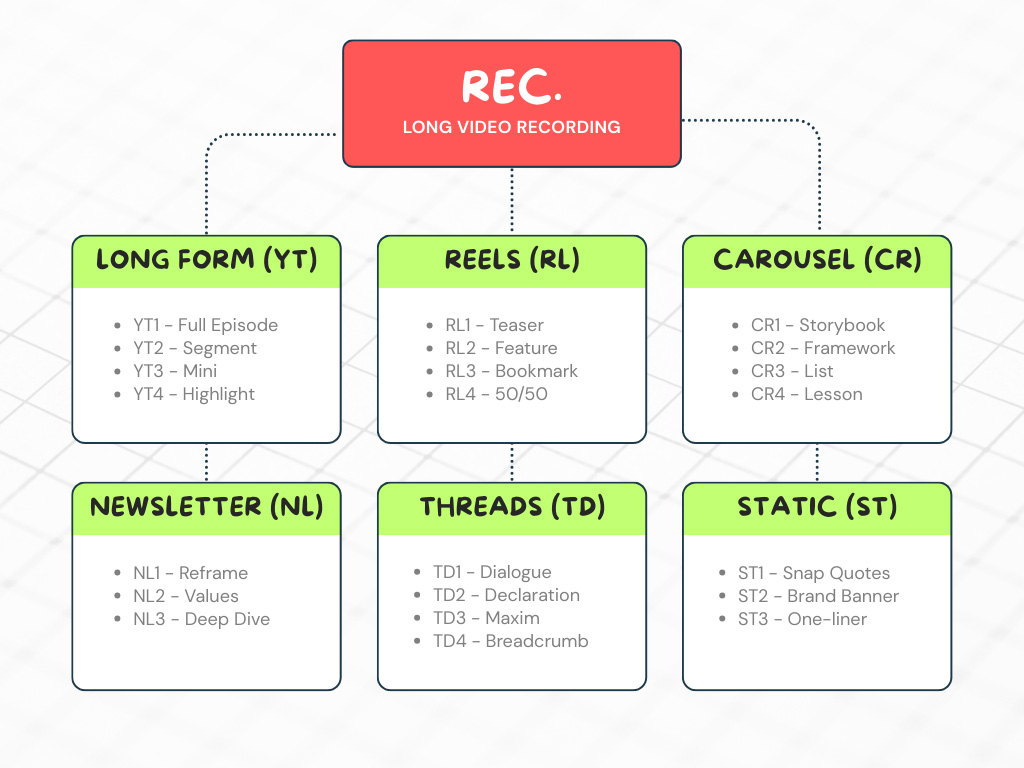
On average, a 90-minute recording can produce about 35 Reels, 15 Long Forms, 20 Statics, 12 Carousels, 30 Threads, and 10 Newsletters.
I think of one recording as a galaxy, and that multiple recordings create a universe.
A brand should not simply have a content catalogue. A brand should be a universe.
My Personal Content Extraction System
This allows me to take a single long video recording, and use its transcript to extract and plot every possible content piece that can be produced from the recording: whether it’s YouTube Videos, Instagram Reels, Carousels or Static Posts; and it can even seed Thread Posts and Newsletters.
Because this makes the assembly part of editing such a breeze, I can then focus entirely on designing the assets.
This is how I’m able to deliver quantity, without sacrificing quality.
When you think of each recording session as an active brainstorming session, then what you’re essentially doing each time you record is gathering content ideas and shaping the many possible content pieces that can be delivered.
This way, we never invent generic content out of thin air, or scramble at the last minute for post ideas. We just sit down once, record—whether it’s a conversation between two people or just you speaking your thoughts—and we crystallize your ideas and original stories into more than a month’s worth of content pieces: from editing assembly, down to the post captions themselves—it’s all crystallized from your own words.
Because the seeds are already in the recording, we just have to water the soil.
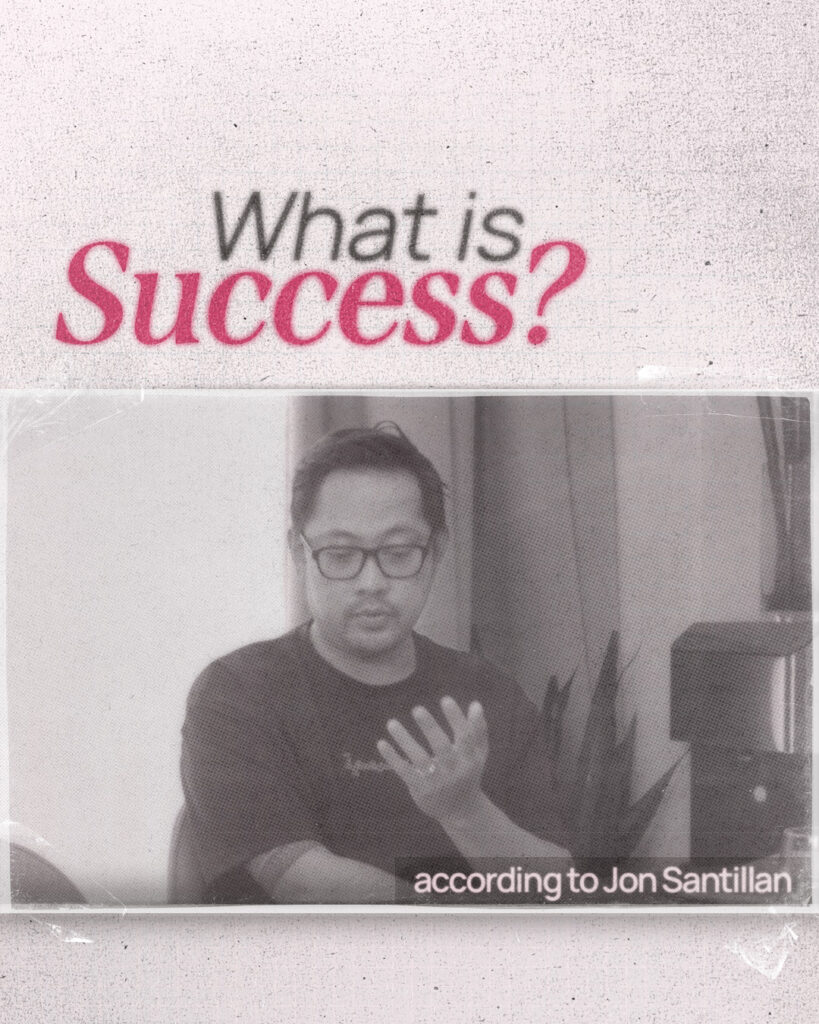
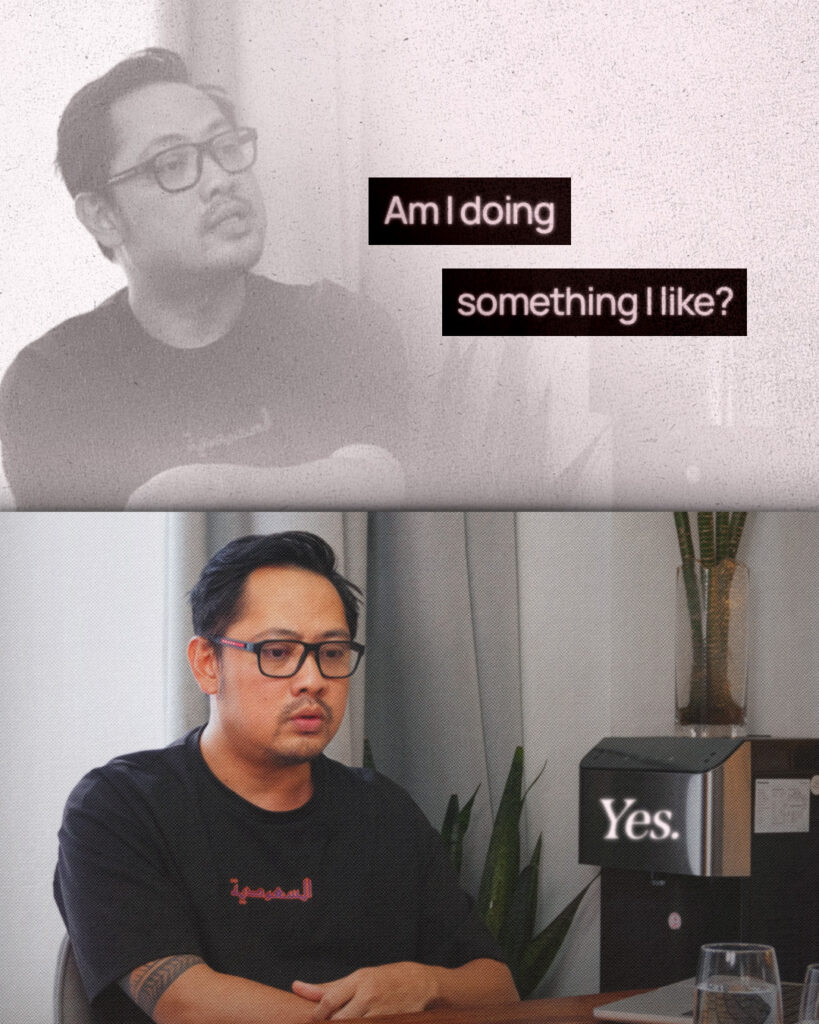
Carousel Design
A good carousel doesn’t just go from left to right,
MJF
it goes up, downright and left all around.
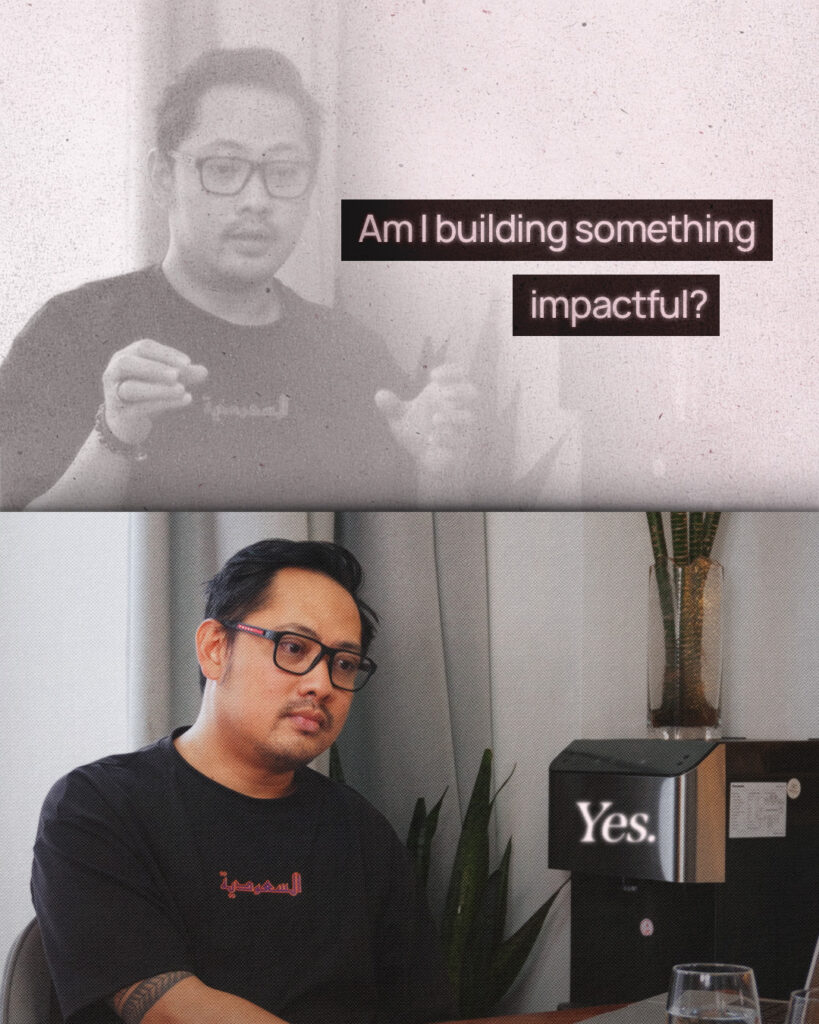
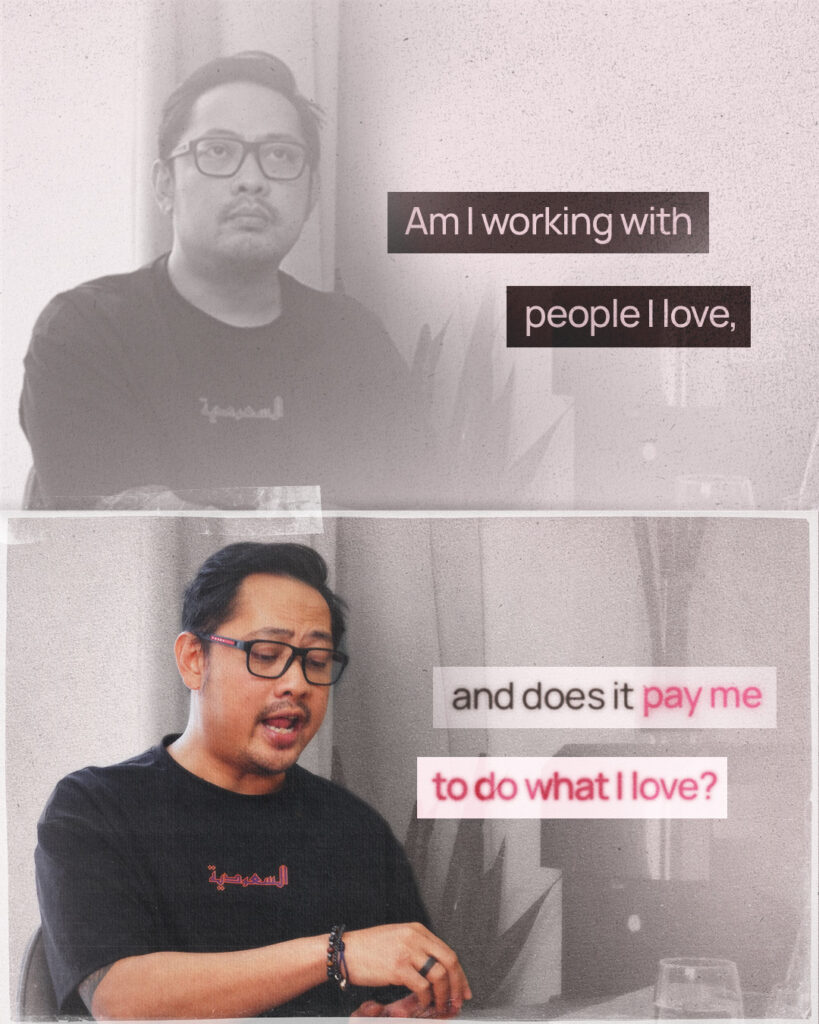
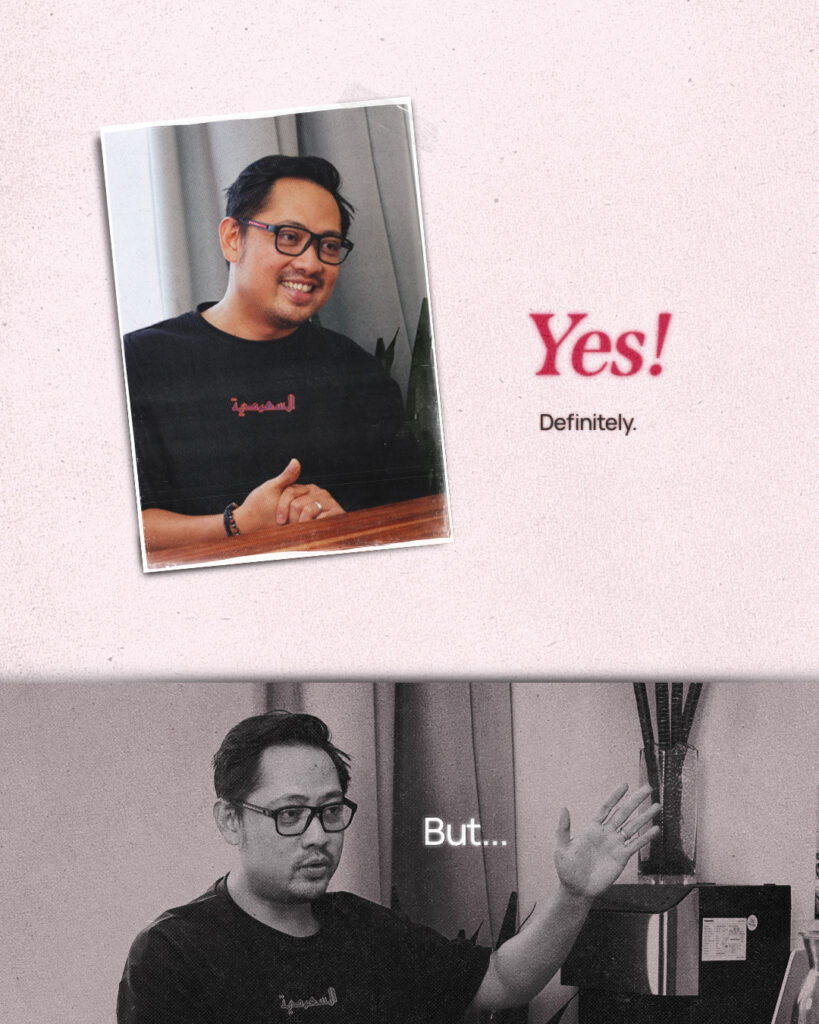
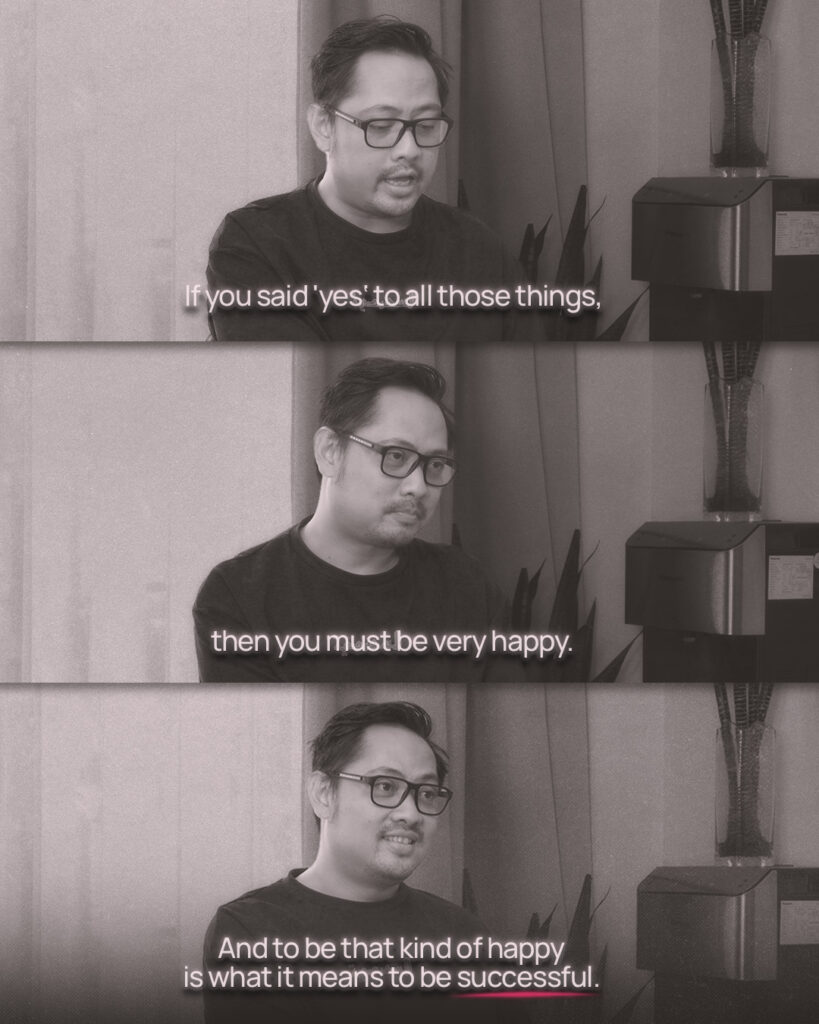
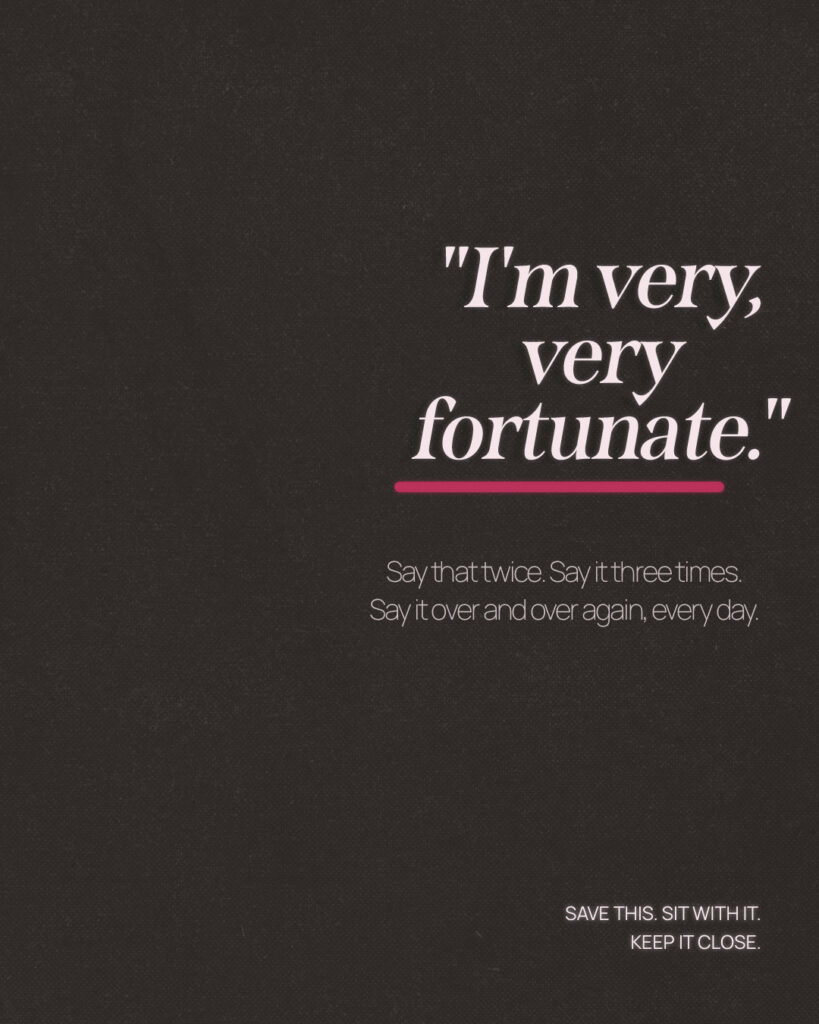
If I were to choose a single word to define all my work, it would be texture.
Not in the design sense, but in the characteristic sensibility for unspoken words;
turbulent stillness, the pull of verbs,
nouns that reverberate;

the breaths between call and response;
brows that yawp and render recoil,
bobs, and nods, and particles that salinate—
the teeth between affirmations;
the stiffness, the anticipation,
the hesitation before the grand resolution.
The dire necessity of a smile before other words.
Most designers design to hide all that texture. I design to let it scream.
(Or sing, whichever it prefers.)
Thumbnails & Packaging
Social media branding is like dropping things in a river.
MJF
Too heavy, and it sinks.
Too light, and it gets swept away by the wind.
It’s all about finding what moves with the stream.
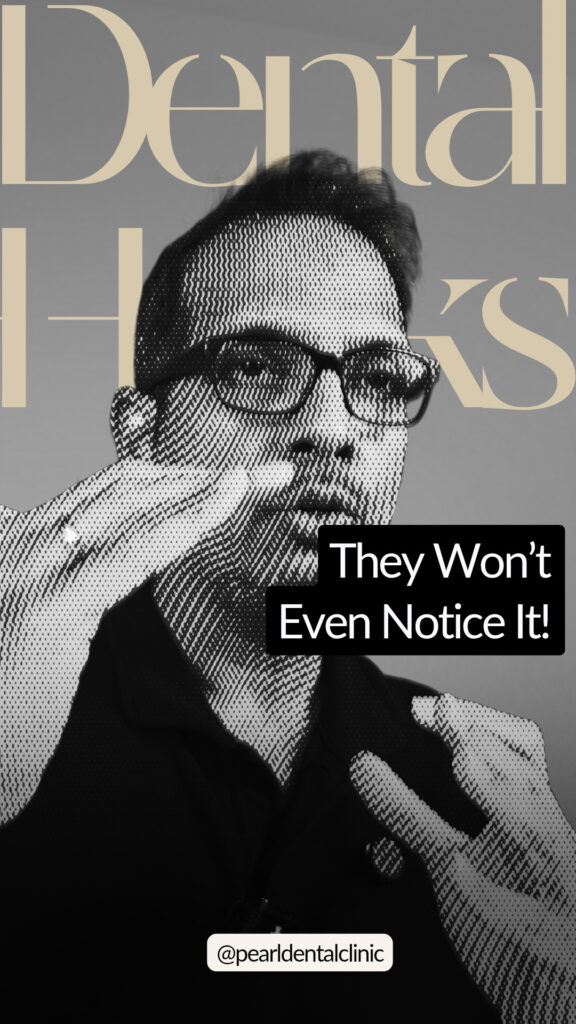

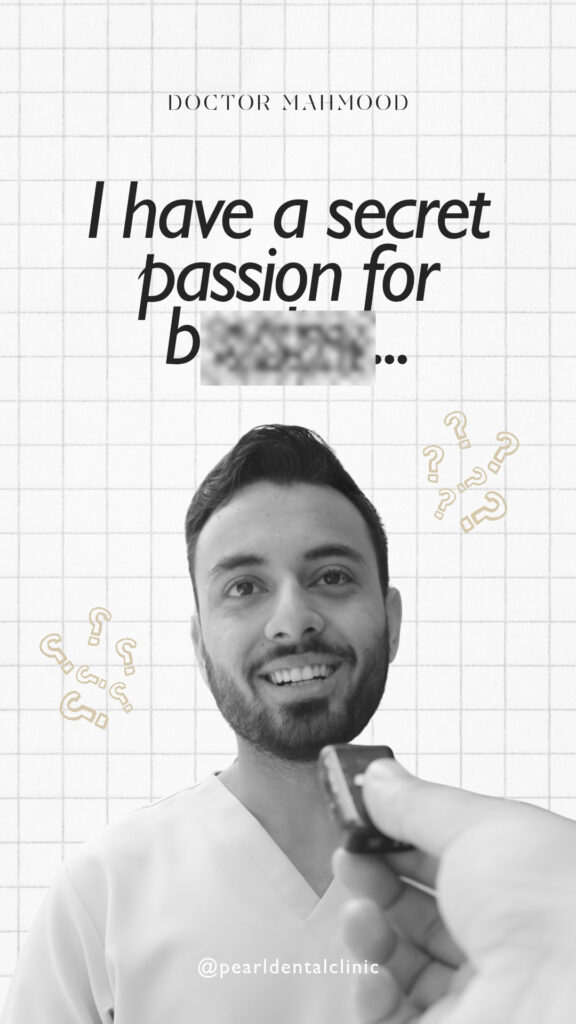
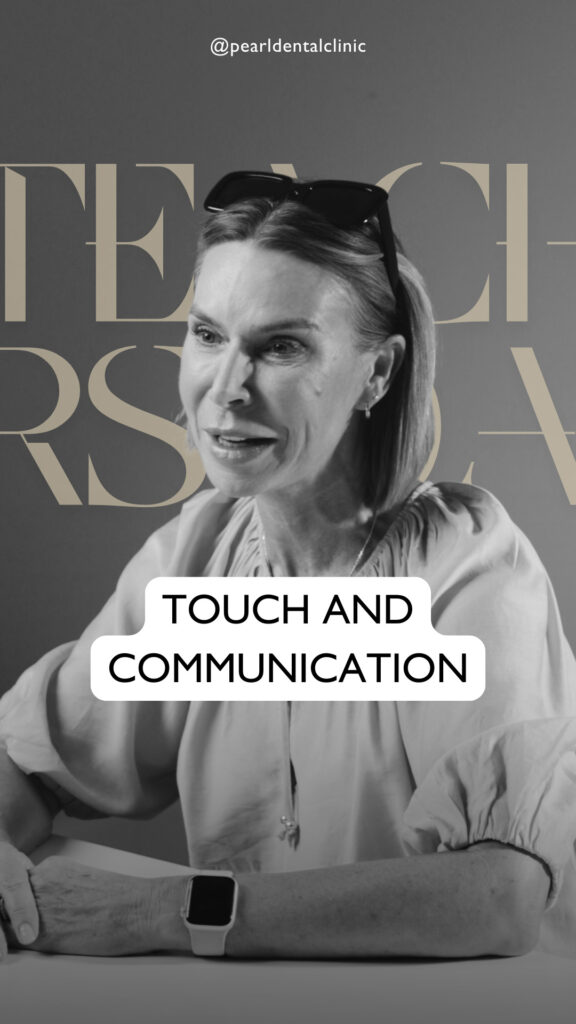
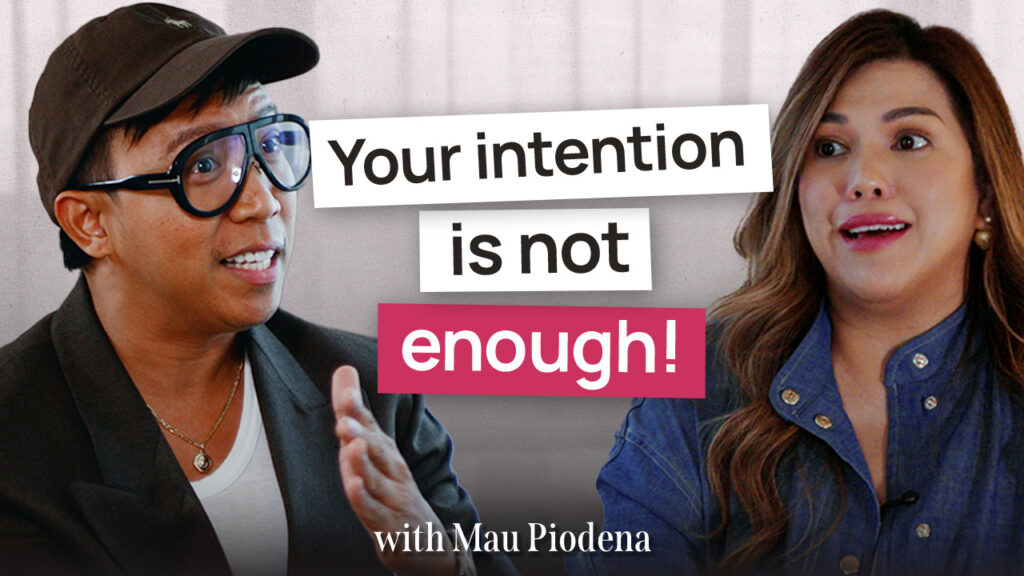
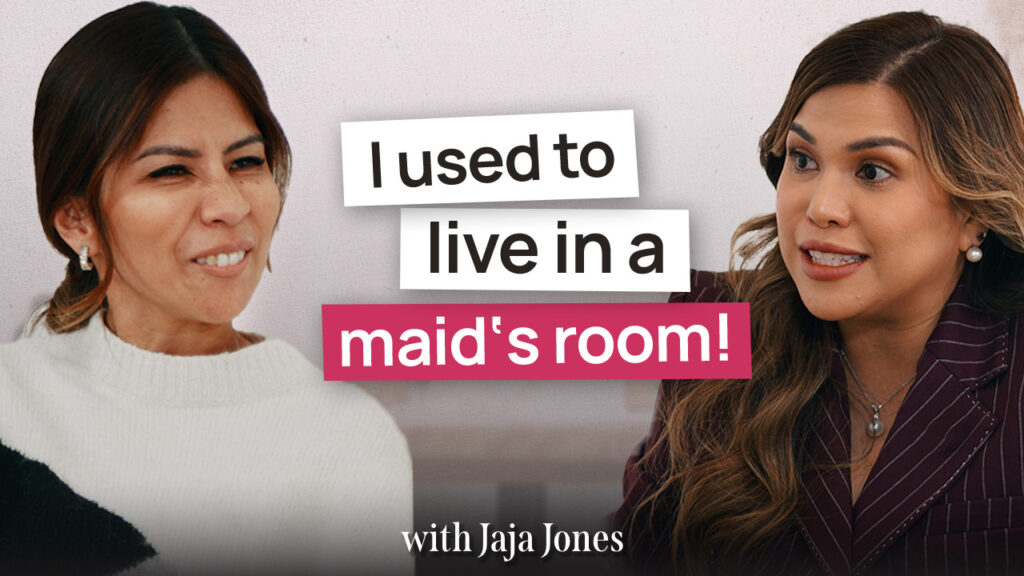

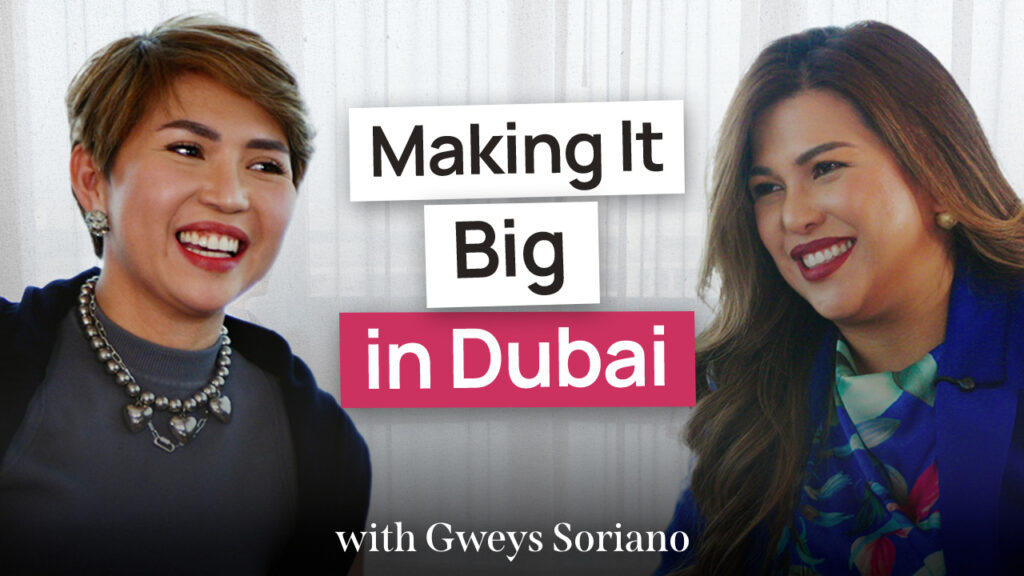
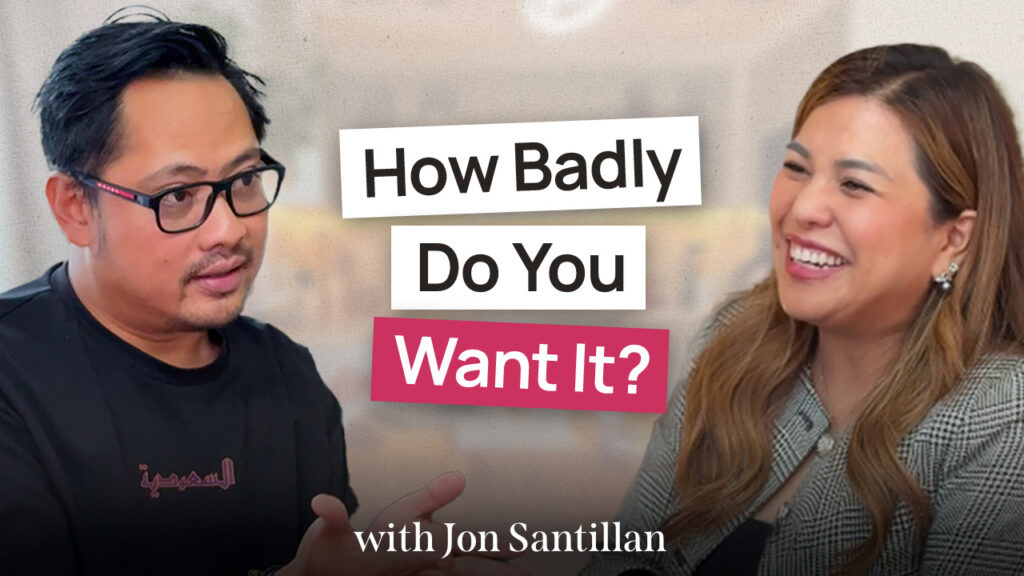
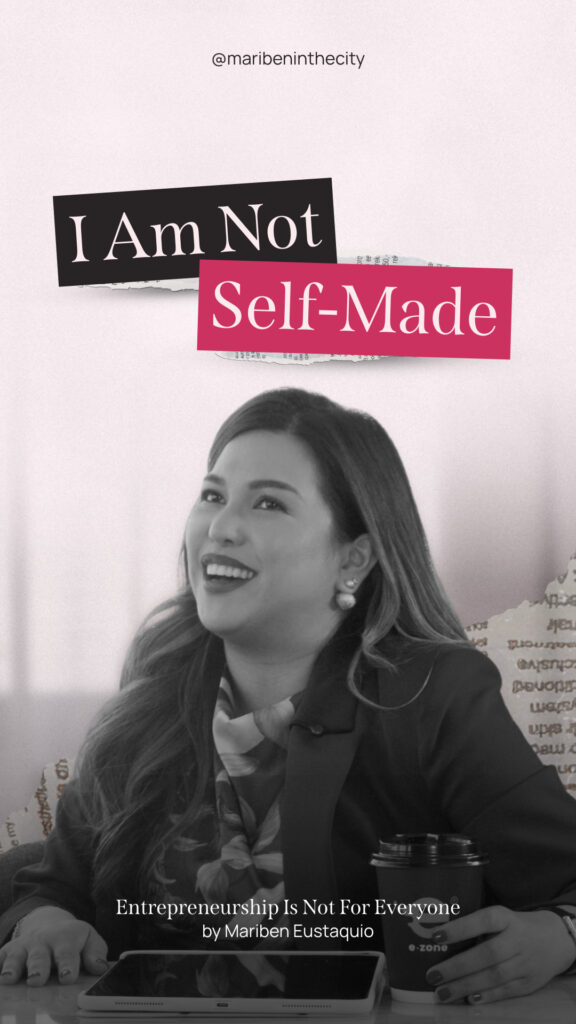
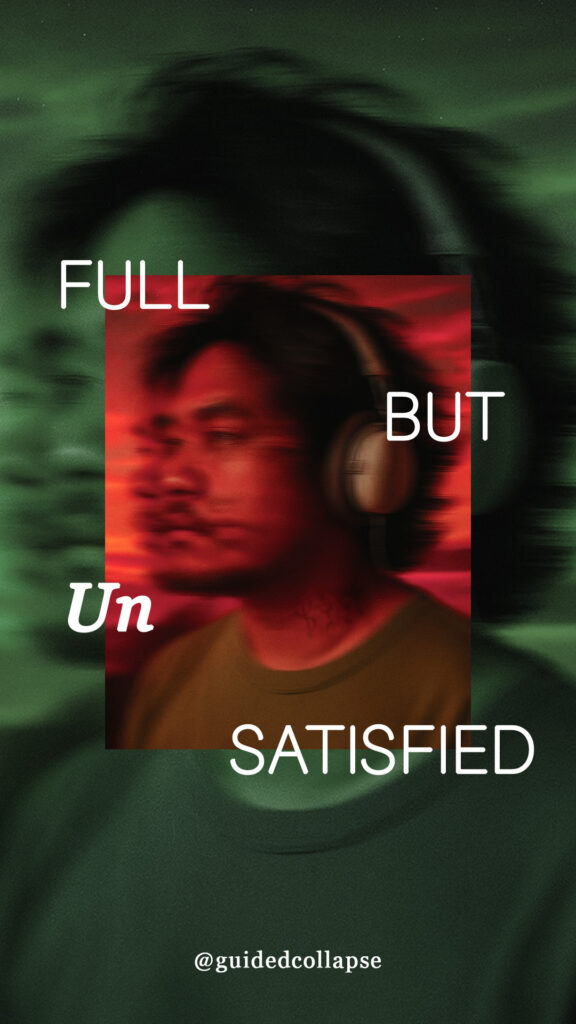

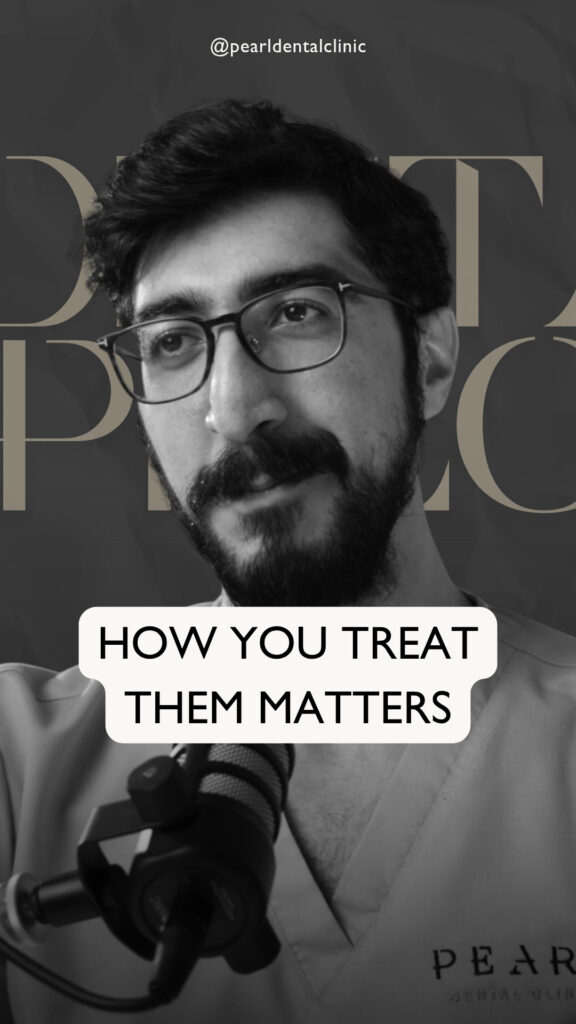
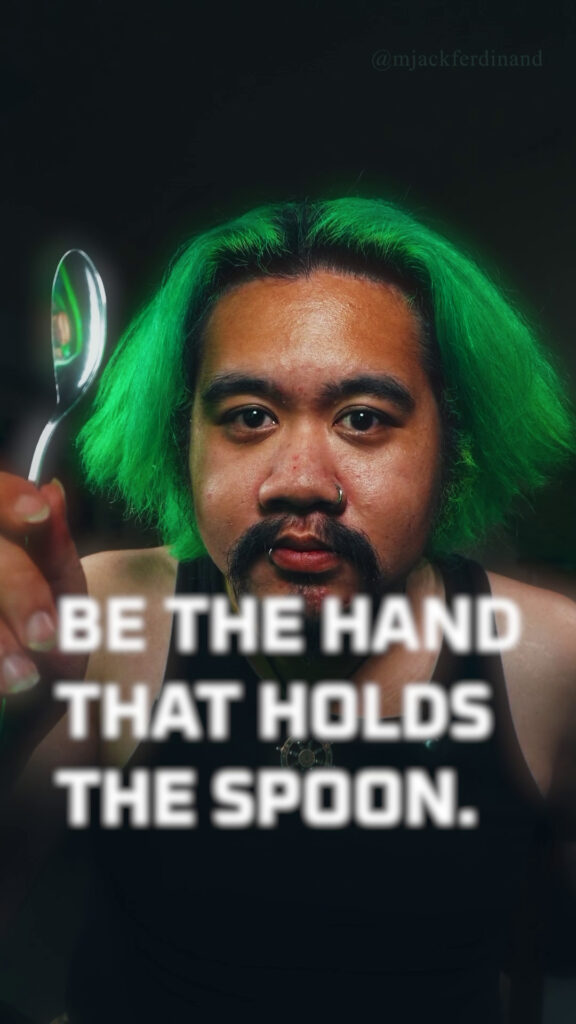
There’s no denying that packaging plays a crucial role in social media content. But too often, people have a tendency to overly sensationalize—or understate—their content with incongruous packaging.
A thumbnail, like any packaging, is a promise of what you’ll get inside. If the packaging is greater than what’s inside, you lose trust. If it’s less, it fails to connect.
As I keep saying, the most important thing about content is that every aspect of it: the dialogue, editing, sound—and packaging—must all move together as one.
It’s not about making one aspect stand out. It’s about treating every piece as an essential (and inevitable!) part of the body, so that the whole stands out.
To be completely honest, I am actually not that big of a fan of rigid “branding design,” when it comes to social media.
Too much of it, and it becomes too commercial, too corporate.
Too clinical.
Most personal brand designers would have you believe that in order to succeed, you need a logo, a signature serif, a color scheme, mathematical captions that sit equidistant from your bosom and your teeth;
yes, they want you to use these precisely as stated in a “kit,” that, of course, they can happily provide you for a nice lump sum.
And I know that leaning into all those pretty things seems like the safest thing to do, and it is!
Pretty safe.
But we’re not out here selling hotdogs and face cream.
You hear “product” thrown around a lot when the gurus and gamers
start tweeting about personal branding and social media presence.
“You are the product. Your content is a product…“
No, I’m of the opposing belief, that whether you’re a business or a personal brand—social media shouldn’t be about transaction;
it should be about connection.
Persuasion, not promotion.
People, not products.
Granted, having a brand kit to start is, indeed, useful.
But the problem is when everything becomes about the brand design. It suffocates the message and leads the audience to wonder if there ever was one.
A strict adherence to guidelines and textbook practices demonstrates a fundamental lack of understanding of modern platforms, which themselves, are very mercurial (and messy!) by nature.
Half the people who were going to see your content have already moved on to other trends, and the other half were always going to skip it anyway, while your team is still pontificating about timing and typefaces.
This is why I’ve always advocated more for the “social” half of the equation.
More social, less media.
We’re here to start conversations, not hand over flyers. You have to be in it, be a part of it, to move in it—because nobody likes a tourist.
And so, I always begin each project by asking: what do I personally want to see on my feed?
I think very few creators ask that.
Yes—to all the colors, fonts, cards and schemes, sure.
But they should only work to elevate what is already there, not manufacture what isn’t.
Good branding is malleable. It should be able to adapt to the platforms and users it wants to connect with.
Above all, consider these two axes: is it one with the message it’s trying to package, and does it feel native to the platform it’s aiming to inhabit?
Because ultimately, either your content moves people, or people move past it.
I know I don’t like seeing ads on social media,
do you?